
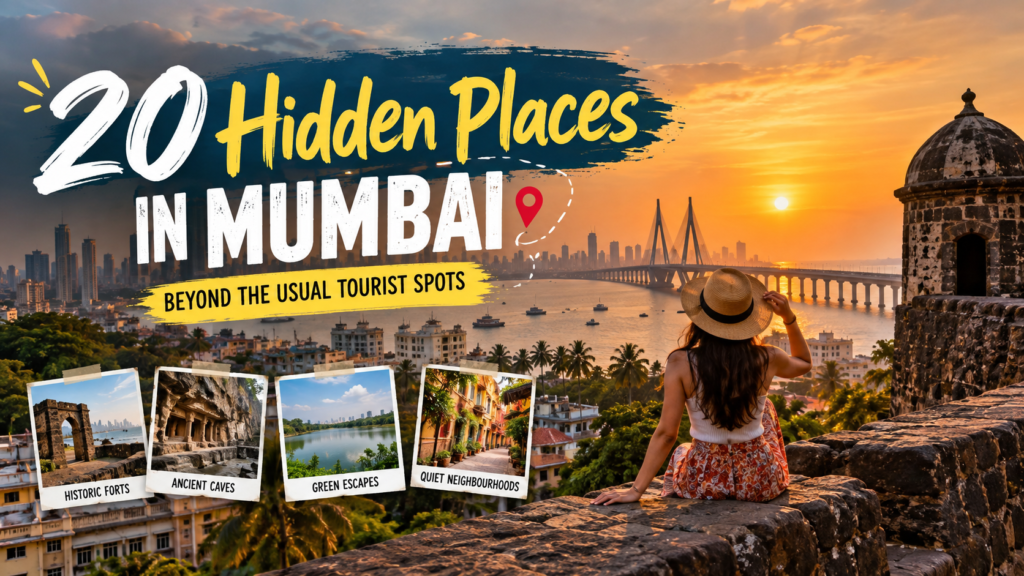
Hidden places in Mumbai offer a different way to experience the city beyond Marine Drive, Gateway of India and Colaba. From historic neighbourhoods and ancient caves to forts, green spaces and waterfront landscapes, Mumbai has plenty of places that are easy to overlook.
From old neighbourhoods and rock-cut caves to forts, green spaces and waterfront landscapes, there are plenty of places to explore beyond Mumbai’s most popular attractions.
In this guide, we have focused on hidden places in Mumbai that offer something different from the city’s usual sightseeing circuit. Some are historic, some are natural, and others reveal a quieter side of everyday Mumbai.
The word “hidden” here does not mean completely unknown. Instead, these are places that can be overlooked when planning a first trip to Mumbai.
Travel note: Opening arrangements, access rules and local conditions can change. Check the relevant official or local source before visiting, especially for heritage sites, caves, nature areas and working waterfronts.
If you’re also exploring Bangalore, you can browse our Bangalore guides and local experiences for more ideas on cafes, nightlife, activities and places to visit.
How to explore hidden places in Mumbai
Exploring hidden places in Mumbai is easier when you group destinations by area. Mumbai is a huge city, so trying to visit all 20 places in one day is not realistic.
Instead, group places by area.
For example, Banganga and Khotachiwadi can fit into a South Mumbai heritage-focused outing. Similarly, Kanheri Caves deserves more time because it is located within Sanjay Gandhi National Park.
Meanwhile, Mahakali Caves and Gilbert Hill can be considered when exploring the Andheri area.
Also, remember that some locations are residential, religious, protected or working spaces. Therefore, visitors should avoid entering restricted areas, disturbing residents or getting in the way of local workers.
Hidden Places in Mumbai: Heritage and Historic Sites
1. Banganga Tank, Walkeshwar

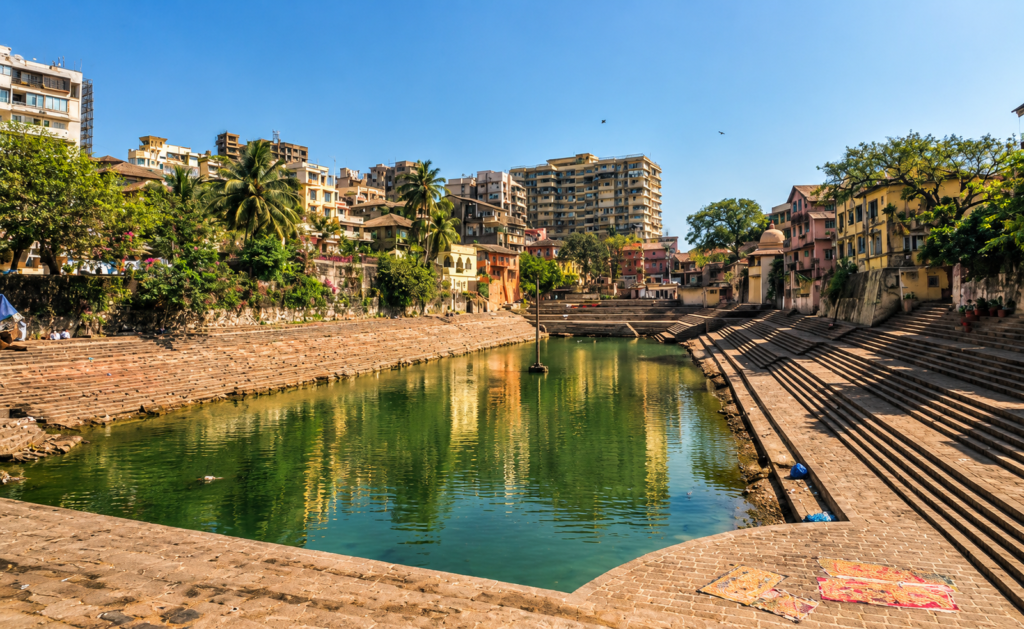
Banganga Tank is a historic water tank located in the Walkeshwar area of South Mumbai.
The tank is surrounded by temples, residences and old structures, giving the area a very different character from Mumbai’s busy commercial districts.
It is also a living religious space. Therefore, visitors should keep noise low and behave respectfully around worshippers and residents.
Best for: Heritage, architecture, photography and a quiet neighbourhood walk.
2. Khotachiwadi, Girgaon
Khotachiwadi is a historic residential neighbourhood in Girgaon known for its traditional houses and narrow lanes.
The neighbourhood provides a glimpse into an older architectural side of Mumbai that can be easy to overlook among the city’s newer buildings.
However, Khotachiwadi is a residential community, not a conventional tourist attraction. So, avoid blocking entrances, making excessive noise or photographing residents without permission.
Best for: Heritage architecture, walking and photography.
Exploring Mumbai with your partner? After discovering the city’s older neighbourhoods, you can also compare ideas for a couple’s outing with our guide to romantic places in Bangalore.
3. Dr. Bhau Daji Lad Museum, Byculla
The Dr. Bhau Daji Lad Museum is one of Mumbai’s important museums, with collections and exhibitions connected to the city’s history, art and culture.
Its historic building also makes it interesting for visitors who enjoy architecture.
Because exhibitions and visitor arrangements can change, check the museum’s official information before planning your visit.
Best for: Mumbai history, art, design and architecture.
4. Horniman Circle Gardens, Fort
Horniman Circle Gardens is located in Mumbai’s historic Fort district.
The gardens are surrounded by significant heritage architecture, making the wider area more interesting than the garden alone. It can also work as a short stop during a walking route through South Mumbai.
Rather than travelling across the city just for this one location, consider combining it with other Fort and Colaba attractions.
Best for: Heritage walks, architecture and a break during a South Mumbai itinerary.
5. Sassoon Dock, Colaba
Sassoon Dock is one of Mumbai’s historic fishing docks and offers a look at the city’s working waterfront.
The environment here is very different from the cafés, hotels and tourist attractions commonly associated with Colaba.
However, this is a working area rather than a conventional sightseeing attraction. Access may be restricted in parts, so visitors should follow local rules and never interfere with fishing or dock operations.
Best for: Understanding Mumbai’s working waterfront and documentary-style photography where permitted.
Forts and coastal places
6. Sewri Fort
Sewri Fort is a historic fort in eastern Mumbai.
The location is particularly interesting because the surrounding landscape reflects Mumbai’s industrial and waterfront character rather than the postcard image of South Mumbai.
The fort’s condition and access arrangements should be checked before visiting. Do not assume that every historic structure in Mumbai is open for unrestricted entry.
Best for: History, photography and exploring eastern Mumbai.
7. Sewri Mudflats

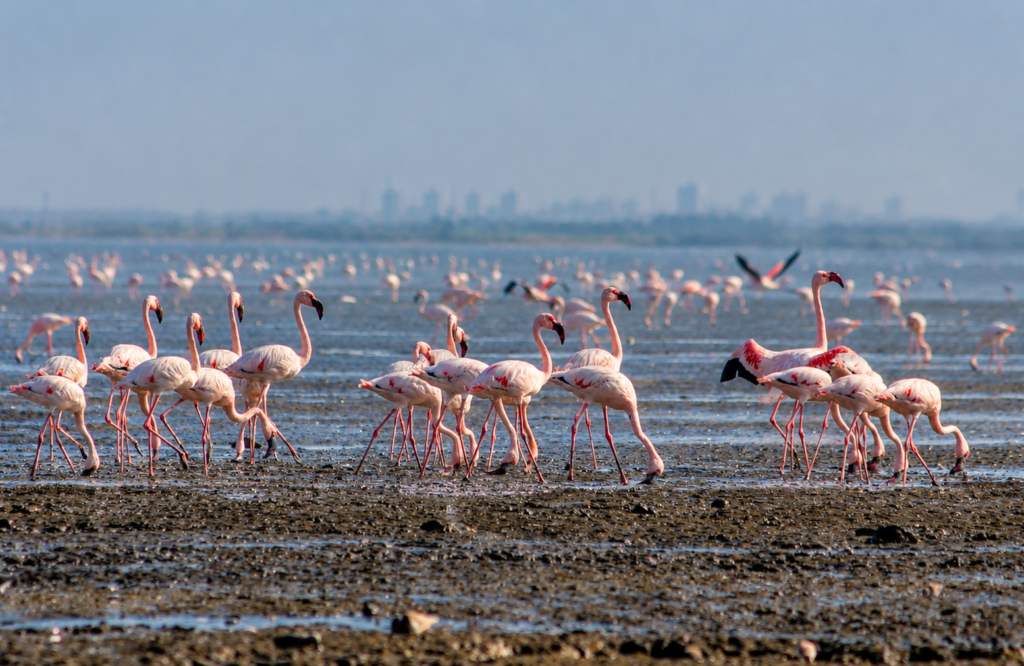
The Sewri waterfront is associated with migratory bird activity, including flamingos that can be seen in the wider Sewri area during the appropriate season.
However, wildlife sightings depend on season, tides, weather and environmental conditions. A flamingo sighting should therefore never be treated as guaranteed.
Visitors should also stay in appropriate public viewing areas and avoid entering sensitive habitat.
Best for: Birdwatching and nature photography.
8. Worli Fort

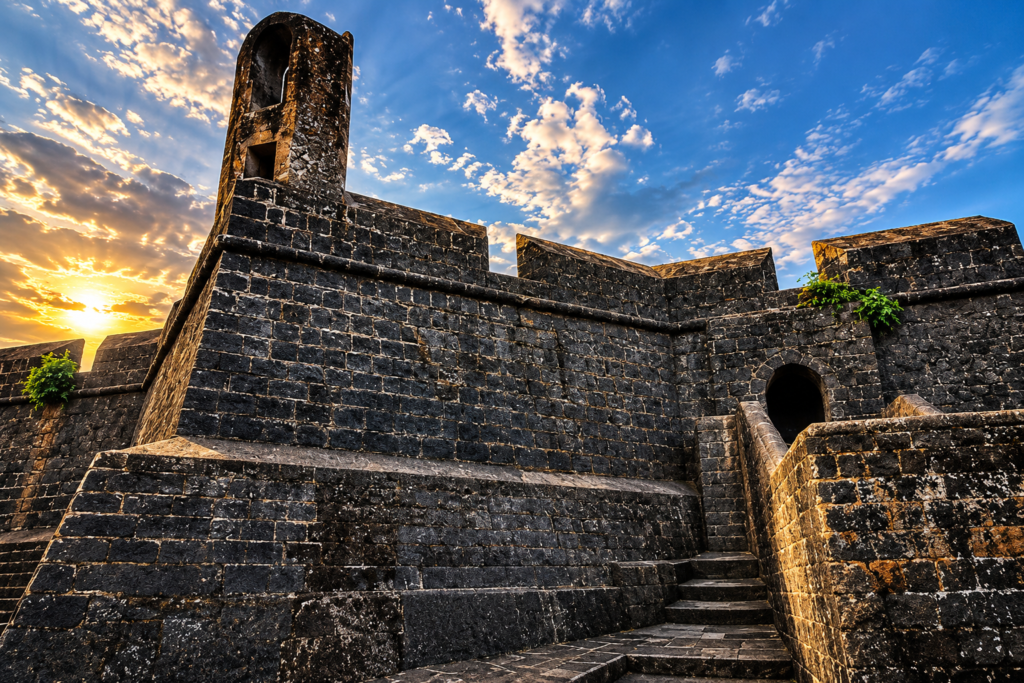
Worli Fort is a historic fortification overlooking the Arabian Sea in the Worli area.
Its coastal location makes it interesting for visitors who want to see a different side of Mumbai’s historic landscape.
However, the condition and accessibility of the fort can change. Check current local information before planning your visit specifically around entering the structure.
Best for: Coastal views, history and photography.
9. Sion Fort
Sion Fort is a historic fortification located on a hill in the Sion area.
Today, it stands within a densely developed part of Mumbai, creating an interesting contrast between the city’s historical landscape and its modern urban surroundings.
The fort is relatively compact, so it is better considered as part of a wider neighbourhood visit rather than a full-day destination.
Best for: History, short walks and urban photography.
10. Bandra Fort
Bandra Fort, also known as Castella de Aguada, is a historic fortification near the Bandra waterfront.
Although it is more familiar than some of the other locations on this list, it can still provide a different experience from Bandra’s cafés, restaurants and shopping streets.
The surrounding waterfront also makes the area useful for a broader Bandra outing.
Best for: Coastal views, history and photography.
11. Madh Fort
Madh Fort is located in the Madh area of western Mumbai.
The wider Madh area has a coastal, village-like character that feels different from central Mumbai’s dense urban environment.
However, visitors should check current access conditions before planning a visit to the fort itself. If entry is restricted, the wider Madh area can still be explored where public access is permitted.
Best for: Coastal exploration and seeing a less urban side of Mumbai.
Caves and unusual landmarks
Some of the most interesting hidden places in Mumbai are tucked into busy neighbourhoods, where historic caves and unusual geological landmarks sit alongside modern buildings.
12. Kanheri Caves, Sanjay Gandhi National Park
Kanheri Caves is one of the most significant historic attractions on this list.
The complex contains rock-cut caves and Buddhist architectural features within Sanjay Gandhi National Park.
Its location means that it is better suited to a planned outing than a quick sightseeing stop.
Allow enough time for travel and exploration, wear comfortable footwear and Check the Sanjay Gandhi National Park visitor information before leaving, particularly for current access arrangements.
Best for: History, archaeology, architecture and nature.
13. Mahakali Caves, Andheri
Mahakali Caves are historic rock-cut caves located in the Andheri area.
One of the most interesting aspects of the site is its setting within a heavily urbanised part of Mumbai. The historic caves therefore provide a striking contrast with the surrounding city.
Visitors should treat the site respectfully and check current access arrangements before visiting.
Best for: Ancient architecture, history and a short heritage outing.
14. Jogeshwari Caves
Jogeshwari Caves are another example of rock-cut architecture within Mumbai’s modern urban landscape.
The caves have historical and religious significance, making respectful behaviour important during a visit.
Their location also demonstrates how layers of Mumbai’s history can survive within rapidly developing neighbourhoods.
Best for: History, architecture and exploring an older side of Mumbai.
15. Gilbert Hill, Andheri
Gilbert Hill is a distinctive geological formation in Andheri.
Its unusual rock structure makes it different from the city’s forts, museums and caves. It is also an example of how Mumbai’s natural geological history exists alongside a dense urban environment.
Access and the condition of surrounding areas should be checked locally before visiting.
Best for: Geology, unusual landmarks and photography.
Green spaces and quieter city escapes
Not all hidden places in Mumbai are historic sites. The city also has green spaces, lakes and quieter areas that provide a break from busy roads and commercial districts.
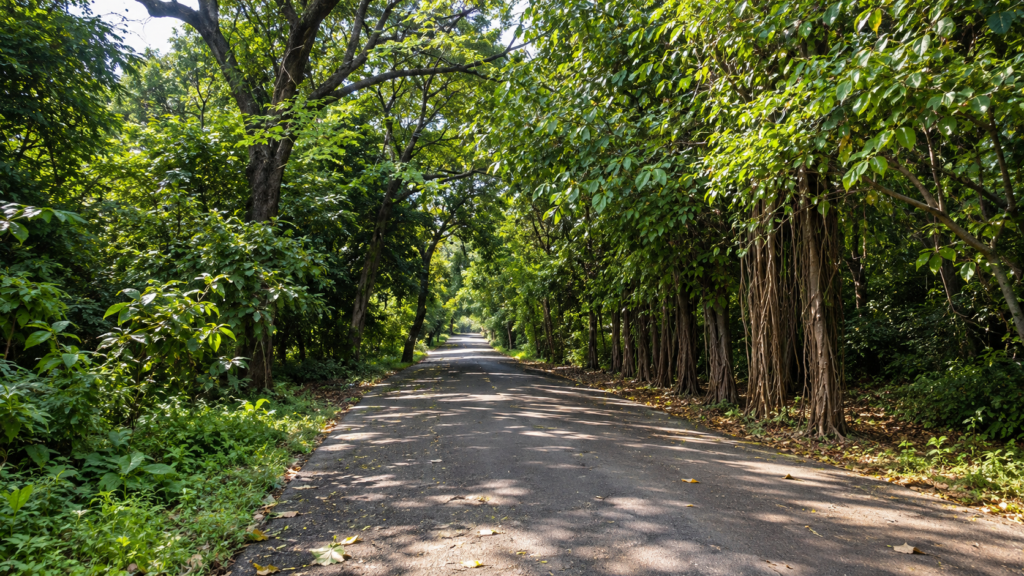
16. Maharashtra Nature Park
Maharashtra Nature Park provides a green space within Mumbai’s dense urban environment.
It is particularly interesting for visitors who want a break from busy roads and commercial areas without travelling far outside the city.
The park also provides an opportunity to learn more about urban greenery and local ecology.
Check current visitor information before planning your visit because activities and arrangements can change.
Best for: Nature walks, greenery and urban ecology.
17. Aarey
Aarey is a large green area within Mumbai that contains a mix of roads, communities, vegetation and other land uses.
It is important not to treat the entire area as one public tourist attraction. Some areas may have specific access conditions or restrictions.
Therefore, stick to permitted public areas and respect local communities and the surrounding environment.
Best for: Green spaces, local exploration and getting away from dense urban streets.
18. Powai Lake
Powai Lake is a large artificial lake in northern Mumbai surrounded by a rapidly developing urban landscape.
The lake provides a different setting from Mumbai’s famous coastal attractions and can be included in a broader Powai itinerary.
For safety, visitors should remain in appropriate public areas and follow local restrictions rather than approaching unsafe sections of the water.
Best for: Lakeside views, evening outings and photography.
If you enjoy starting a city outing early, Mumbai has plenty of waterfront and outdoor experiences to explore. And if Bangalore is your next destination, you can continue that theme with our guide to the best sunrise places in Bangalore, featuring ideas for an early-morning outing around the city.
19. Chota Kashmir
Chota Kashmir is a recreational area associated with Aarey in northern Mumbai.
It has historically been known as a local leisure destination and is another example of Mumbai’s pockets of greenery.
Because facilities and activities can change, check current information before planning your visit around a particular attraction.
Best for: A relaxed local outing and green surroundings.
20. Global Vipassana Pagoda, Gorai
The Global Vipassana Pagoda is a large meditation and architectural centre in the Gorai area.
Its distinctive architecture and scale make it very different from Mumbai’s conventional sightseeing spots.
Visitors should follow the centre’s rules and guidance, particularly because it is a meditation-focused environment rather than simply a tourist attraction.
Check the Global Vipassana Pagoda visitor information before travelling to confirm current access arrangements.
Best for: Architecture, meditation and a peaceful day outing.
How to plan your Mumbai hidden-place itinerary
These hidden places in Mumbai are spread across a large geographical area. Therefore, planning around neighbourhoods is much more practical than choosing places randomly.
For a heritage-focused day
Consider building an itinerary around Banganga, Khotachiwadi and the Fort area.
You can spend time walking rather than repeatedly crossing the city.
For caves and history
Kanheri Caves deserves a dedicated outing because of its location within Sanjay Gandhi National Park.
Mahakali and Jogeshwari Caves can be considered separately when exploring western Mumbai.
For coastal Mumbai
Bandra Fort, Worli Fort, Madh and the Sewri waterfront offer very different coastal experiences.
However, do not assume that all forts or waterfront areas have unrestricted public access.
For nature
Aarey, Maharashtra Nature Park and Powai provide options for seeing Mumbai’s greener side.
Meanwhile, Sewri is particularly relevant to visitors interested in birdwatching during the appropriate season.
Before you leave
Carry water, comfortable footwear and sun protection for outdoor outings.
Also, check current access information before travelling. This is especially important for forts, caves, museums, parks, religious locations and working areas.
Finally, give yourself extra travel time. Mumbai’s distances can look manageable on a map, but traffic and public transport connections can significantly affect an itinerary.
If you’re planning a trip beyond Mumbai as well, Bangalore offers plenty of options for short escapes outside the city. Our guide to the best places to visit near Bangalore can help you find ideas for a weekend or short getaway.
Frequently Asked Questions
Some lesser-known alternatives to Mumbai’s headline attractions include Banganga Tank, Khotachiwadi, Mahakali Caves, Jogeshwari Caves, Kanheri Caves, Sewri and Maharashtra Nature Park. However, popularity varies among local residents and visitors.
Banganga, Khotachiwadi and the Fort area are useful starting points for a heritage-focused outing. Kanheri Caves offers a different type of historic experience because it combines rock-cut architecture with a natural setting.
Flamingos can be seen in the wider Sewri waterfront area during the relevant migratory season. However, sightings depend on environmental conditions, tides and timing, so they should not be guaranteed in an itinerary.
Access varies by location and can change. Before visiting Sewri Fort, Worli Fort, Sion Fort, Bandra Fort or Madh Fort, check current information and follow any restrictions in place.
Kanheri Caves, Mahakali Caves and Jogeshwari Caves are notable historic cave sites in Mumbai. Their visitor arrangements differ, so check current information before travelling.
Not all 20. Mumbai is geographically large, and several locations are far apart. A better approach is to choose two or three places in the same part of the city.
Group locations by area and leave enough time for travel. Also, research current access arrangements before leaving, particularly when visiting historic, religious, protected or working sites.
Final Thoughts
Mumbai’s most famous attractions deserve their place on a first-time itinerary. However, they are only one part of the city.
The city’s historic neighbourhoods, caves, forts, green spaces and waterfront areas reveal different layers of Mumbai.
The best approach is therefore to slow down and explore one part of the city at a time.
Whether you choose an old neighbourhood in South Mumbai, a historic cave in the suburbs, a waterfront landscape or a green space, these experiences can help you see Mumbai beyond its usual tourist checklist.
Before visiting, always check current official or local information for access, timings, entry requirements and restrictions.